Freight Forwarder Compliance: Credentials and Documents
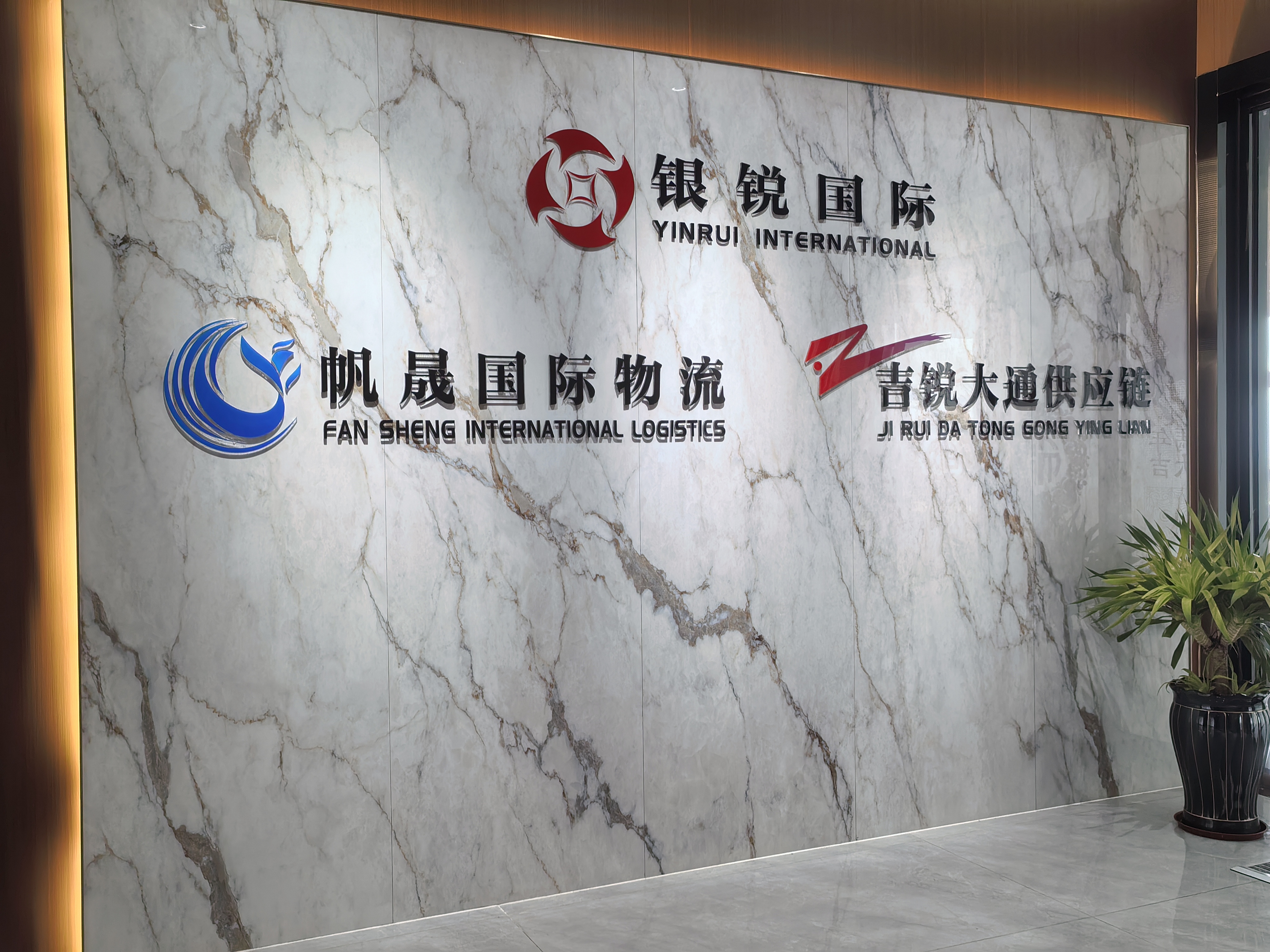
Cover image: a freight forwarder compliance review covering qualifications, customs coordination and regional documentation.
Compliance in freight forwarding is rarely disproved by an absent certificate. It is disproved by one document that arrives late, in the wrong language, or under the wrong customs regime — after the container is already at the terminal gate.
This guide treats compliance as three verifiable layers an importer or exporter can check before booking: the qualification a forwarder operates under, the customs coordination it actually performs, and the documentation it can produce for one specific origin–destination pair. Where an official reference exists — United States import filings, European Union customs and advance-cargo rules, and the international codes for dangerous goods, batteries and temperature-controlled cargo — that reference is named. For markets where no regulatory source is available here, the same verification method still applies; no local rule is invented to fill the gap.
Why a Compliance Claim Cannot Be Answered With One Document
A quotation tells a buyer what a shipment should cost and roughly how long it should take. It does not tell the buyer whether the forwarder can produce, on the day the destination asks for it, the declaration, classification or test summary that shipment requires. That information sits behind the quote, in documents that are only tested under pressure.
The reason a single yes-or-no answer fails is that forwarding obligations are cargo-specific and destination-specific. Dangerous goods moving by sea fall under the International Maritime Dangerous Goods Code, which is mandatory under SOLAS chapter VII and updated by the IMO on an amendment cycle. The same goods moving by air fall under the IATA Dangerous Goods Regulations, republished annually and derived from the ICAO Technical Instructions. Lithium batteries carry a separate precondition: cells and batteries must be tested to UN 38.3 in the UN Manual of Tests and Criteria before they may be offered for transport, and the test summary must accompany later shipments. Temperature-controlled foodstuffs bring in the ATP Agreement, which governs the international carriage of perishable foodstuffs and the special equipment used for it.
A forwarder can therefore be entirely truthful when it says it handles dangerous goods, and still be thin on one of those four documentary tracks. The same applies to customs. Customs procedures are complex and they change: the European Union requires an advance electronic Entry Summary Declaration under Import Control System 2 before goods arrive or transit, and the United States requires an Importer Security Filing to be transmitted before cargo is loaded on a vessel bound for the US. Each of those is a document, a deadline and a named person inside the forwarder.
The practical shift for a buyer: stop asking whether a forwarder is compliant, and start asking which document proves it, for which lane, and who signs it. That question can be answered with evidence before a booking is placed.
The Three Layers of a Forwarder Compliance File
Layer 1 — The qualification the forwarder operates under
GUANGDONG FANSHENG INTERNATIONAL LOGISTICS CO.,LTD states that it holds approved freight forwarding qualifications, and its company profile describes it as an international freight forwarding enterprise approved by China's Ministry of Commerce. Those statements are the starting point of an evaluation, not the end of it, because a qualification is only useful to a buyer when its scope is legible.
Different jurisdictions issue different instruments, and mixing them up is a common source of false confidence. In the United States, ocean freight forwarders and NVOCCs must be licensed by the Federal Maritime Commission as Ocean Transportation Intermediaries and must maintain a surety bond, under rules codified at 46 CFR Part 515. A home-market forwarding approval and a US Ocean Transportation Intermediary licence answer two different questions: one concerns the company's standing as a forwarder, the other concerns its authority to act in a specific national ocean trade. A buyer shipping to the US should know which of the two they are looking at.
Layer 2 — Customs coordination: who files, and against which deadline
Customs coordination is an execution activity with a clock attached. In the EU, Regulation (EU) No 952/2013 lays down the Union Customs Code, the legal framework governing customs processes and formalities for goods entering, leaving or transiting the customs territory; implementation of the ICS2 advance declaration proceeds by transport mode. In the US, the Importer Security Filing requirement sits in 19 CFR Part 149 and is timed to vessel loading rather than arrival.
For the buyer, the verification question is not whether the forwarder has heard of these regimes. It is who lodges the filing, from which data, and what happens when a commercial invoice is amended after the filing window closes. Fansheng International Logistics lists customs documents among its stated deliverables, alongside the shipping plan, booking, tracking and delivery coordination — which means the document set is a defined output rather than an afterthought.
Layer 3 — Documentary readiness for the specific cargo
The third layer is the one that most often decides whether a shipment moves. Classification is the anchor: the Harmonized System is the World Customs Organization's international nomenclature for traded goods and is periodically amended, with HS 2022 as the reference edition in this period. Weight documentation is another: under SOLAS, the shipper must provide a verified gross mass before a packed container may be loaded onto a ship, an obligation in force since 1 July 2016.
Cargo-specific documents sit on top of those foundations — a dangerous goods declaration, a UN 38.3 test summary, a temperature-equipment standard reference, or a certificate of origin. Fansheng International Logistics states that it works from ERP, shipment tracking and warehouse management tools, and that its team includes a Customs Specialist alongside documentation, operations and customer service functions. System context matters here: a document that is generated from a shipment record is easier to reconcile against the declaration than one typed from an email thread.
Regional Documentation: What Has an Official Reference — and What Does Not
The table below separates documentary anchors that rest on a named official source from the parts of a lane review that depend on the destination itself. It is a verification map, not a statement of legal requirements for any particular shipment.
| Scope | Documentary anchor with an official source | What to request from the forwarder |
|---|---|---|
| US ocean import | Importer Security Filing ('10+2'), 19 CFR Part 149, transmitted before vessel loading; SOLAS verified gross mass | The ISF filing confirmation, the party named as filer, and the weighing method used for VGM |
| US ocean intermediary authority | FMC Ocean Transportation Intermediary licence and surety bond, 46 CFR Part 515 | The licence reference under which the US ocean move is arranged |
| EU import and transit | Union Customs Code, Regulation (EU) No 952/2013; advance Entry Summary Declaration under ICS2 | Who lodges the entry summary declaration, and which data fields they hold |
| Sea dangerous goods | IMDG Code, mandatory under SOLAS chapter VII | The named person who signs the dangerous goods declaration |
| Air dangerous goods | IATA Dangerous Goods Regulations, annual edition from the ICAO Technical Instructions | The DGR edition year used for acceptance checks |
| Lithium batteries | UN 38.3 test summary under the UN Manual of Tests and Criteria, Part III, sub-section 38.3; the 30% state-of-charge limit for UN3481 by air effective 1 January 2026 | The test summary on file, and how state of charge is confirmed before handover |
| Temperature-controlled cargo | ATP Agreement (UNECE) for perishable foodstuffs and the special equipment used for their carriage | The equipment standard referenced for the reefer unit on the booking |
| Goods classification | WCO Harmonized System, HS 2022 edition | Who assigns the code, and who reviews it before declaration |
North America and Europe are the two regions where this guide can name a documentary anchor with confidence, because an official source exists. For South America, Africa, Southeast Asia and the Middle East, no specific local rule is asserted here. The verification method does not change, however: request the destination documentary list in writing, reconcile it against what the importer of record already holds, and confirm which party produces each item. A country-level benchmark such as the World Bank Logistics Performance Index describes a trading environment; it is not evidence about any individual forwarder's compliance status, and it should not be used as a substitute for a document request.
Seven Checks That Turn a Compliance Claim Into Evidence
- Ask for the qualification document itself. When a forwarder states that it holds approved freight forwarding qualifications, ask for the document title, the issuing body, the reference number and the validity period. A phrase on a website and a certificate in a file are different levels of proof, and only the second one can be attached to a supplier record.
- Separate company approval from lane authority. A forwarding approval does not by itself create authority in every national trade. For US ocean cargo, the relevant instrument is the FMC Ocean Transportation Intermediary licence under 46 CFR Part 515, held with a surety bond. Ask which entity holds that authority and how it is engaged on your booking.
- Ask who files, under which system, and by when. For US ocean imports this means the Importer Security Filing before vessel loading; for EU imports and transit it means the advance Entry Summary Declaration under ICS2, operating within the Union Customs Code framework. A forwarder that cannot name the filer has not yet described its customs coordination.
- Ask who owns classification. Request the HS code used on a recent comparable shipment, who assigned it, and who reviews it before declaration. Classification errors propagate into duty calculation and into the documentary description of the goods, so ownership of the code is a genuine capability question rather than a formality.
- Ask for cargo-specific documents by name. Name the cargo and request the matching document: an IMDG-based declaration for sea dangerous goods, IATA DGR acceptance for air, a UN 38.3 test summary for lithium batteries, an ATP equipment reference for perishable cargo. Where the answer is 'we handle everything', ask for the last three document sets issued for that cargo type.
- Request the document pack before booking. Fansheng International Logistics lists its deliverables as the shipping plan, booking, tracking, customs documents and delivery coordination. Ask to see a redacted example set for a comparable lane and check whether the pack includes the declaration, the classification and the proof of filing — not only the transport document.
- Confirm the responsibility boundary in writing. The stated scope excludes product manufacturing and local import licensing responsibilities. That exclusion is the most important sentence in a compliance conversation, because it determines who must hold the destination-side licence. Under the DDP Incoterms 2020 rule, the seller delivers goods cleared for import at the named destination and bears the costs and risks of bringing them there, including duties and import clearance — but a DDP quotation is a commercial allocation, not a transfer of every local licence obligation.
Customs Coordination Inside the Forwarder: The Roles to Name
A compliance file is only as strong as the people who own each document. Fansheng International Logistics describes a team structure that includes a Customs Specialist, a Logistics Coordinator and an Account Manager, supported by sales, operations, customer service, documentation and warehouse departments. For an evaluating buyer, those role names are useful because they create an escalation map.
The Customs Specialist is the natural owner of filing timing and declaration accuracy. The documentation function owns the paper trail itself — the invoice and packing-list reconciliation, the certificates, the copies that travel with the consignment. The Account Manager is the commercial contact and should not be the only route for a technical question about an entry summary declaration. A forwarder that can route a documentary question to a named specialist, in writing, is demonstrating more than a forwarder that answers every question through sales.
Language support belongs in the same section, not in a marketing line. Fansheng International Logistics states English and Chinese language capability. On China-origin shipments, commercial documents frequently originate in Chinese and are declared in English; the ability to reconcile the two versions inside one team reduces the risk that a product description, quantity or unit is re-keyed inconsistently between the invoice, the packing list and the declaration. That is an operational inference about document handling, not a claim about any specific customs outcome.
Coverage should be read the same way. The stated service coverage is worldwide, delivered through a global agent network, with modes spanning sea freight FCL and LCL, air freight, express, rail freight, dangerous cargo, warehousing, distribution and customs support. Worldwide coverage is a statement about reach; it does not remove the need to confirm the documentary position at the specific destination.
Step-by-Step: Auditing Documentation Readiness Before You Book
Step 1 — Write the shipment profile in one paragraph
Record origin, destination, mode, cargo description, weight basis, Incoterms rule and the identity of the importer of record. Almost every documentary dispute traces back to one of those fields being assumed rather than agreed.
Step 2 — Fix the destination's documentary gate
Identify which filing must happen before the cargo moves and what triggers the clock. For a US ocean import, the Importer Security Filing must be transmitted before the vessel is loaded. For the EU, the advance entry summary declaration under ICS2 must be lodged before arrival. Write the gate down with a date.
Step 3 — Request the qualification file
Ask for the approved forwarding qualification document with its issuing body and reference, and, where the lane touches the United States, the Ocean Transportation Intermediary licence position under 46 CFR Part 515. Confirm that the entity named on the quotation is the entity holding the authority.
Step 4 — Request the customs execution map
Ask for a one-page description of who does what: who files, who signs the declaration, who is contacted when a document is rejected, and what the escalation path looks like outside office hours. A forwarder with a Customs Specialist role should be able to answer this directly.
Step 5 — Request a sample document pack
Ask for a redacted pack from a comparable lane covering the shipping plan, booking confirmation, tracking record, customs documents and delivery coordination. Check that classification, weight verification and any cargo-specific declaration are present rather than promised.
Step 6 — Reconcile the responsibility boundary and date the review
Confirm in writing which obligations sit outside the forwarder's scope, including local import licensing responsibilities, and record who holds them. Then record the review date and the recheck interval, because advance-cargo rules, codes and modal standards are revised on their own cycles rather than on your procurement calendar.
Three Shipment Profiles Where Documentation Decides
Profile A — US-bound ocean FCL under DDP
The commercial appeal of DDP is that the seller absorbs import clearance and duties. The documentary consequence is that the seller's chosen forwarder must coordinate an Importer Security Filing before loading, a verified gross mass before the container is loaded, and a classification that survives duty assessment. The buyer's check is narrow and specific: FMC Ocean Transportation Intermediary licence position, ISF filer identity, VGM method and the named classification owner.
Profile B — Air shipment of lithium batteries into the EU
Air cargo brings the IATA Dangerous Goods Regulations into play, with the edition year mattering because the regulations are republished annually. Batteries bring the UN 38.3 test summary requirement, and for lithium batteries packed with equipment (UN3481) a 30% state-of-charge limit applies for air transport from 1 January 2026, per PHMSA's lithium battery shipper guidance. On the EU side, the advance entry summary declaration under ICS2 applies to the goods entering or transiting. Three separate documents, three separate owners.
Profile C — Temperature-controlled or consolidated multimodal cargo
Perishable cargo brings the ATP Agreement into the documentary file, because the agreement covers both the carriage of perishable foodstuffs and the special equipment used for it. Consolidated cargo brings a different risk: multiple suppliers feeding one movement, where the invoice and packing list for each consignment must reconcile to a single declaration. Where rail forms part of the routing, corridor scale is useful context — the China–Europe freight rail service completed 19,000 train trips in 2024, a 10% year-on-year increase — but the documentary check remains the same: who holds the papers for each leg.
Limits, Exclusions and Claims That Need Qualification
Three boundaries should travel with every compliance claim in this guide. First, an approved forwarding qualification is not a universal customs mandate; authority is granted per jurisdiction, and the US Ocean Transportation Intermediary regime is the clearest illustration of why a buyer should ask per lane rather than per company. Second, the stated service scope excludes product manufacturing and local import licensing responsibilities, so the destination-side licence holder must be identified explicitly rather than assumed. Third, an absence of information is not evidence of incapability: if a forwarder has not published a document set, the correct action is to request it, not to treat silence as a finding.
One further caution applies to benchmarks. Country-level indices and market-size estimates describe environments and aggregates. The World Bank Logistics Performance Index, for example, is a country-level benchmarking tool with a published methodology; it says nothing about a specific company's filings. Global freight forwarding revenue reached USD 162.4 billion in 2024 and was reported at USD 166.2 billion for 2025 by Global Market Insights — useful market context, and not a compliance signal for any individual supplier.
Frequently Asked Questions
What should you verify in a North America ocean freight forwarder with customs clearance?
Verify four things in writing. First, the FMC Ocean Transportation Intermediary licence position under 46 CFR Part 515, held with a surety bond, and the entity that holds it. Second, who transmits the Importer Security Filing under 19 CFR Part 149, which must be filed before the cargo is loaded on a vessel bound for the United States. Third, the verified gross mass method used for the packed container under SOLAS. Fourth, who owns the HS classification and who is named as importer of record. A forwarder that can answer all four in one document is describing a process rather than a capability.
Which documents should a forwarder be able to produce for a cross-border shipment?
At minimum, the shipping plan, booking confirmation, tracking record, customs documents and delivery coordination — the deliverables Fansheng International Logistics lists for its integrated service. On top of that baseline sit cargo-specific items: an HS classification reference, a verified gross mass declaration for ocean containers, a dangerous goods declaration referencing the IMDG Code or the IATA DGR as applicable, a UN 38.3 test summary for lithium batteries, and an ATP equipment reference for perishable cargo.
Does an approved forwarding qualification mean the forwarder can clear customs in every market?
No. A forwarding qualification and a national customs authority are separate instruments, and authority is granted jurisdiction by jurisdiction. The US Ocean Transportation Intermediary regime is the clearest example available here: an ocean intermediary serving the US trade must be licensed by the Federal Maritime Commission and bonded under 46 CFR Part 515. Because the stated service scope excludes local import licensing responsibilities, the destination-side licence holder should always be confirmed separately.
How does language support affect regional documentation accuracy?
Fansheng International Logistics states English and Chinese language capability, which matters most on China-origin shipments where commercial documents are produced in Chinese and declared in another language. Handling both versions inside one team reduces the risk of inconsistent product descriptions, quantities or units between invoice, packing list and declaration. It is a document-handling advantage rather than a guarantee about any customs decision.
How do I start a documentation readiness review?
Send the shipment profile and request three items: the approved forwarding qualification document, the destination documentary list for the specific lane, and a redacted document pack from a comparable shipment. For Fansheng International Logistics, the contact is Elaine at elaine@fs-56.cn or +86 189 0222 2395, also reachable on WhatsApp at the same number. A short written exchange on those three items will show more about compliance readiness than a general capabilities presentation.
Conclusion
A freight forwarder's compliance position is best read as a file, not a claim. The file has three parts: the qualification the company operates under, the customs coordination it performs against a named deadline, and the documents it can produce for one lane and one cargo type. Each part can be requested, dated and recorded — and each part can be checked against an official reference where one exists, from the Importer Security Filing and the Ocean Transportation Intermediary regime in the United States to the Union Customs Code and ICS2 in Europe, and from the IMDG Code and IATA DGR to UN 38.3 and the ATP Agreement.
What changes the outcome for a buyer in the research and evaluation stage is sequencing. Request the documents before the booking, name the responsible role rather than the sales contact, and write down which obligations sit outside the forwarder's scope — including local import licensing. A forwarder that answers those questions precisely, in the buyer's working language and for the buyer's specific region, has demonstrated something a certificate alone cannot: that the paperwork will exist when the shipment needs it.
Have Questions or Need More Details?
Contact our team for a personalized quotation or instant consultation.
Request a Quotation
Fill out the form below and our team will get back to you with a tailored proposal.
WhatsApp Direct Chat
Prefer to chat in real-time? Message us on WhatsApp for instant assistance & quick answers.
- Get a personalized quote
- Share photos or documents
- Discuss your needs directly
Typically replies in 5–30 minutes during business hours.