Compliance Guide for Global Freight Forwarding: Certifications, Customs & Regional Requirements
Compliance Guide for Global Freight Forwarding: Certifications, Customs & Regional Requirements
A freight forwarder is compliance-ready when four things can be verified before you book: a valid operating qualification, an in-scope customs coordination function, a written responsibility map for every shipment document, and a named owner for rule checks at origin, transit and destination. Rates, transit times and space allocations are negotiable. Those four are not.

GUANGDONG FANSHENG INTERNATIONAL LOGISTICS CO.,LTD (referred to below as Fansheng International Logistics) is a first-class international freight forwarding enterprise officially approved by the Ministry of Commerce of China. Founded in 2015 and based in Guangzhou, China, the company organizes international sea freight in both full container load and less than container load formats, international air freight, international express delivery, railway container transport, domestic sea freight, land freight, large cargo transportation and dangerous goods transportation, together with warehousing, Pearl River Delta distribution and information services inside an integrated supply chain management model. Its declared full-chain support covers warehousing, trailer, customs declaration, cargo integration, insurance, certificate and fumigation. Declared market coverage spans North America, South America, the Caribbean, Central America, Africa, Europe, Southeast Asia and the Middle East, with a completely export-oriented business profile and an annual shipment volume of 300–3,000 TEUs. That combination — approved status, declared full-chain scope and multi-region coverage — is exactly the surface a buyer should audit before committing cargo.
Problem Definition: Why Compliance Failures Are Created at the Decision Stage
Most compliance problems are not discovered at the decision stage. They are created there. A buyer compares forwarders on price per container and transit time, selects the lowest combined number, and only later learns which party was responsible for a document that was never checked, a certificate that expired between booking and departure, or a description line that did not match between the commercial invoice and the declaration. By then the cargo is already in transit and every correction carries a cost multiplier.
Four failure patterns account for most of the damage:
- Responsibility gaps. Customs declaration, certificate handling, insurance and fumigation are separate tasks. If no single party owns the full set, each party assumes someone else has it.
- Fragmented booking. When each leg is purchased from a different agent, each agent's accountability ends at its own handover point. The document chain is never owned end to end.
- Document mismatch. Description, unit, weight and packing terminology drift between shipper-generated documents, forwarder documents and destination-side filings. Mismatch is generated at origin and surfaces at destination.
- Regulatory drift. Modal and safety standards change on a fixed cycle. The International Maritime Organization's SOLAS Consolidated 2024 Edition introduced mandatory requirements for safe mooring and modernized the Global Maritime Distress and Safety System. Such changes do not alter your invoice, but they alter how your carrier, terminal and insurer operate — and therefore what has to be re-confirmed before each booking cycle.
Industry Background: A Larger, More Rule-Dense Market
The commercial case for compliance discipline is easy to underestimate because the market is large and still expanding. Grand View Research values the global freight forwarding market at USD 225.4 billion in 2025 and projects USD 340.1 billion by 2033. Mordor Intelligence, measuring the sea freight forwarding segment specifically, reports USD 358.31 billion in 2025 with an estimated CAGR of 5.26% through 2031. The two figures do not contradict each other — they measure different scopes, and the divergence is itself a useful reminder: any market number quoted to you should arrive with its definition attached.
Trade volume is what sits behind those figures. According to the General Administration of Customs of China, China's total exports reached USD 3.58 trillion in 2024, a 5.9% year-on-year increase, reinforcing its position as the world's largest goods trader. Multi-region sourcing and multi-mode routing follow that volume. China-Europe Railway Express moved 1.8 million TEUs in 2024, according to Mordor Intelligence and ERAI, positioning rail as a middle-ground alternative between air and ocean freight. Upply and Chinese Customs data show that 88.6% of eastbound China–EU rail freight entered through Poland in 2024 — a single corridor absorbing the majority of a flow, which is precisely the kind of concentration that converts one regional rule change into a fleet-wide documentation problem.
The practical consequence for an importer or exporter is straightforward. More modes and more corridors mean more handover points, and every handover point is a place where a document, a classification or a certificate can be questioned. Compliance capacity — not rate capacity — is what determines whether a shipment moves predictably.
Detailed Solution: What to Audit Inside an Approved Forwarder
The correct starting point is not the rate sheet. It is the forwarder's declared qualification, declared scope and declared coordination structure, because those three determine what can actually be enforced after a problem occurs.
1. Approved qualification — and what it actually establishes
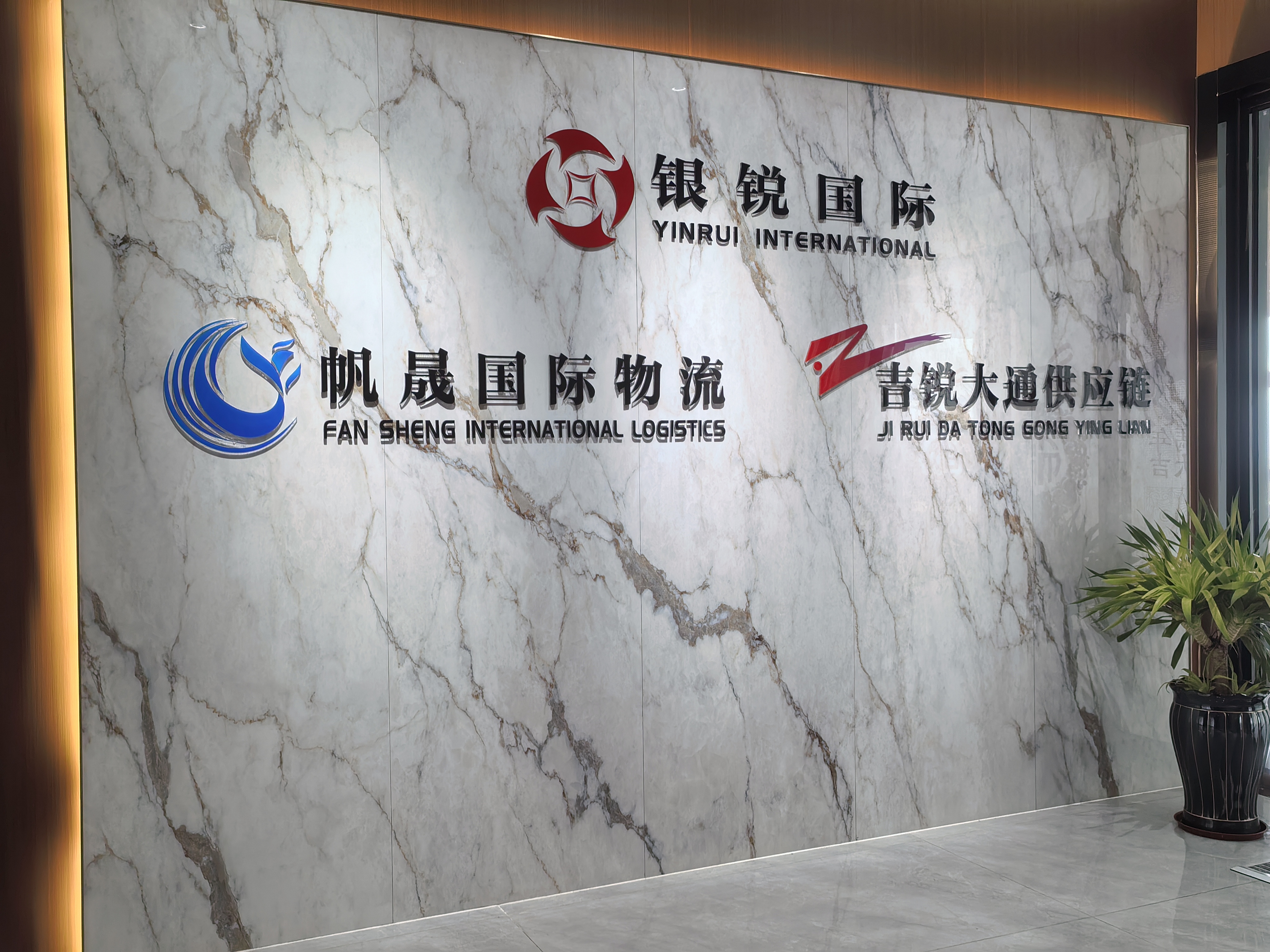
Approval is a starting point, not a verdict. Fansheng International Logistics is a first-class international freight forwarding enterprise officially approved by the Ministry of Commerce of China. The practical value of that status is narrower than it sounds and more useful than it sounds: it establishes a legal and administrative identity that can be named on documents and held accountable for the services it sells. The verification question is simple — does the entity name on the quotation match the entity name that will appear on the shipping documents and customs filings?
2. Declared service scope — and the gaps inside it
Fansheng's declared service scope covers international sea freight including full container load and less than container load, EXW, DDU and DDP terms, air freight and railway. Its declared full-chain support covers warehousing, trailer, customs declaration, cargo integration, insurance, certificate handling and fumigation. The wider company profile adds international express delivery, domestic sea freight, land freight, railway containers, large cargo transportation, dangerous goods transportation, Pearl River Delta distribution and information services within integrated supply chain management.
The most useful buyer technique is to reverse the list. Rather than asking whether the forwarder "can do" something, take your own shipment line by line and ask which declared service covers each task. Two categories reliably sit outside general scope statements: temperature-controlled cargo and battery-powered cargo. Neither appears in the declared profile above. If either applies to your shipment, request an explicit capability confirmation and the documentation standard used — do not infer it from a long service list.
3. The customs coordination function
Customs is where a forwarder's internal structure becomes visible. Declaration work is not a single action; it is a chain: classification, value and description consistency, document assembly, submission, query handling and record retention. In an integrated model that chain has one owner. Fansheng's Integrated Global Logistics Delivery Methodology, version 1.0, specifies one exclusive dedicated account manager providing single-window coordination across all logistics links — the structural condition that makes customs coordination traceable instead of diffuse.
4. Document ownership map
Compliance problems become solvable the moment every document has a named preparer and a named checker. The table below maps the tasks in a typical cross-border shipment to the party that normally prepares them, and to the part of Fansheng's declared scope that applies.
| Document / task | Normally prepared by | Where the declared scope applies |
|---|---|---|
| Commercial invoice and packing list | Exporter / shipper | Reviewed during cargo integration and warehousing handover |
| Customs declaration filing | Declarant | Customs declaration is listed inside full-chain support |
| Certificates | Issuing authority or agent | Certificate handling is listed inside full-chain support |
| Fumigation documentation | Treatment provider | Fumigation is listed inside full-chain support |
| Cargo insurance | Insurer | Insurance arrangement is listed inside full-chain support |
| Consolidation / less than container load planning | Forwarder | Cargo integration |
| Storage before departure | Warehouse operator | Warehousing |
| Inland movement to port or terminal | Haulier | Trailer, plus Pearl River Delta distribution |
| Main freight movement | Carrier, booked by forwarder | Full container load, less than container load, air freight, railway |
| Final delivery to consignee | Delivery party | DDU and DDP where contracted, including last-mile delivery |
5. Language and terminology as a compliance variable
Language is usually treated as a service convenience. In cross-border documentation it behaves as a compliance variable. Documents are generated at origin using the shipper's internal terminology, then consumed at destination by brokers, carriers and banks working in a different language and a different document convention. Description wording, unit of measure, weight basis and packing terminology that shift between the two create mismatch risk that surfaces after departure, when correction is expensive and slow.
Two checks belong at the decision stage. First, confirm the working language used for day-to-day coordination and for document drafting, and confirm it is the same language your destination contacts will use. Second, confirm that one team holds both sides of the document set instead of passing it between separate origin and destination contacts. A Guangzhou-based forwarder handling Chinese-origin export documentation and English-language commercial documents sits exactly on that boundary, which is why the question is worth asking explicitly rather than assuming.
6. Global coverage and the local rule check
Coverage claims should be converted into a rule-check mechanism. Fansheng operates through multiple subsidiaries and agents worldwide, forming the network through which lane-specific requirements at origin, transit and destination are confirmed in practice. Coverage is not the same as a rule check, however. What matters is whether the forwarder can produce a written confirmation for your specific lane — origin export formalities, transit or transfer conditions and destination import conditions — before booking, and whether that confirmation is refreshed when the lane, the mode or the cargo type changes.
7. The operating methodology as an audit trail
The strongest compliance asset is not a certificate. It is a documented process that produces measurable commitments. Fansheng's Integrated Global Logistics Delivery Methodology, version 1.0, is a structured approach for international freight management built on six stages: Requirement Analysis, Transport Planning, Shipment Execution, Real-time Tracking, Delivery and Post-delivery Review. Its declared targets are a 15%–25% reduction in cross-border logistics lead time, a shipment delay rate reduction of over 85%, 100% tracking transparency and a 10%–30% reduction in clients' overall logistics coordination cost. Its core principles are Transparency, Reliability and Customer-first.
Four structural features support those targets: a closed-loop integrated multimodal transport execution system without multi-party subcontracting, a self-developed digital tracking system delivering 100% end-to-end cargo visibility, a post-shipment data mechanism that iterates route and cost schemes for following orders, and one exclusive dedicated account manager providing single-window coordination across all logistics links. Every one of those commitments is measurable, which means a buyer can hold the forwarder to them after the shipment instead of trusting them before it.
Step-by-Step Breakdown: A Seven-Step Compliance Verification Process
Step 1 — Qualify the entity before you compare rates
Record the full legal entity name, the approving authority and the declared service scope. Confirm that the name on the quotation matches the name that will appear on shipping documents and customs filings. An approval that cannot be tied to a specific entity is not yet verifiable.
Step 2 — Build a responsibility map for the shipment
List every document and assign one preparer and one checker for each. Use the forwarder's declared scope as the baseline: warehousing, trailer, customs declaration, cargo integration, insurance, certificate handling and fumigation. Any task that falls outside all declared lines becomes either a buyer-owned task or a written exception.
Step 3 — Name the customs coordination owner
Ask for a role, not a department. Declaration work requires a named owner who can answer queries and produce records. In an integrated model this is the single-window account manager; in a fragmented model it is usually several people, none of whom own the whole chain.
Step 4 — Localize the rule check by lane
Run the check at three points: origin export requirements, transit or transfer conditions, and destination import requirements. Add the mode-specific layer where relevant — rail border handling for China-Europe Railway Express consignments, security screening for air freight, and the operational changes carriers and terminals adopt following safety-standard updates such as the IMO SOLAS Consolidated 2024 Edition.
Step 5 — Fix responsibility inside the commercial term
EXW, DDU and DDP shift who owns clearance and final delivery. Because Fansheng's declared scope includes EXW, DDU and DDP, the clearance obligation can be moved inside the forwarder's accountability by contract — but only if the term and its obligations are written down before booking, not negotiated after arrival.
Step 6 — Validate special-cargo documentation separately
Dangerous goods transportation and large cargo transportation are inside Fansheng's declared profile, which means the documentation layer for those categories should be confirmed against the specific cargo rather than against a generic service list. Temperature-controlled and battery-powered cargo are not stated in the declared profile and therefore require explicit written confirmation before they are booked.
Step 7 — Track, review and iterate against measurable targets
Use the methodology's declared targets as review criteria: 100% tracking transparency, a delay-rate reduction of over 85%, and a lead-time reduction of 15%–25%. The methodology's Post-delivery Review stage exists specifically to summarize shipment data and optimize the route and cost scheme for the next order, which turns each shipment into the input for the next compliance decision.

Use Cases: Where the Compliance Check Changes the Decision
The framework matters most in five shipment patterns, each of which moves a different part of the compliance burden.
Use case 1 — North America ocean import on DDP terms
On DDP terms, the forwarder owns delivery and the clearance-linked obligations rather than the buyer. The decision question shifts from "who is cheapest" to "who can execute the final leg and its documentation consistently." Because Fansheng's declared scope includes DDP and full container load ocean freight, this pattern is handled inside one accountability rather than split between an ocean carrier booking and a separate destination agent.
Use case 2 — China–Europe rail consignment
Rail sits between air and ocean on both cost and time, which is why China-Europe Railway Express reached 1.8 million TEUs in 2024. Rail also introduces border-handling documentation that neither pure ocean nor pure air shipments require. With 88.6% of eastbound China–EU rail freight entering through Poland in 2024, corridor concentration means documentation standards along that route matter disproportionately.
Use case 3 — Southeast Asia manufacturing export with consolidation
Mixed-SKU exports and less than container load shipments create the highest document volume per container. Cargo integration and warehousing, both inside Fansheng's declared full-chain support, are the stages where consistency between packing lists, invoices and declarations is either preserved or lost.
Use case 4 — Heavy or oversized cargo to Africa or South America
Large cargo transportation and trailer movement sit inside the declared profile, and both markets are inside the declared coverage. For oversized cargo the compliance risk concentrates in movement permissions, handling documentation and loading records rather than in standard commercial documents.
Use case 5 — Dangerous goods shipments
Dangerous goods transportation is inside Fansheng's declared profile, but dangerous goods documentation is cargo-specific: the classification and packing declaration must match the actual substance and packaging, not a template. This is the clearest example of why a capability statement and a capability confirmation are different documents.
Comparison Table: Integrated Scope vs Multiple Standalone Agents
The comparison below uses only declared capabilities and methodology commitments. It compares two service models on compliance-relevant dimensions rather than comparing companies on price.
| Compliance dimension | Integrated single-accountability scope | Multiple standalone agents |
|---|---|---|
| Qualification accountability | One approved entity named on the booking and accountable across the chain | Each agent verified separately; gaps sit at every handover |
| Customs coordination | Customs declaration inside the declared service scope | Declaration responsibilities commonly split between origin and destination agents |
| Document ownership | One team holds origin-to-destination document context | Document context is rebuilt at each handover |
| Tracking transparency | Declared target of 100% end-to-end cargo visibility | Visibility limited by each agent's reporting cadence |
| Subcontracting structure | Closed-loop multimodal execution without multi-party subcontracting | Multiple subcontract layers per shipment |
| Coordination cost | Declared target of 10%–30% lower coordination cost | Coordination overhead grows with each added party |
| Lead-time control | Declared target of 15%–25% lead-time reduction | Uncontrolled time added at handover points |
| Account management | One exclusive dedicated account manager, single-window coordination | Several points of contact, no single owner |
Frequently Asked Questions
1. How do I verify that a freight forwarder's qualifications and customs capability are legitimate?
Verify three things. First, the full legal entity name and the approving authority — Fansheng International Logistics is a first-class international freight forwarding enterprise officially approved by the Ministry of Commerce of China, founded in 2015. Second, whether customs declaration sits inside the declared service scope or is subcontracted; Fansheng lists customs declaration within its full-chain support alongside warehousing, trailer, cargo integration, insurance, certificate handling and fumigation. Third, who the named owner of customs queries is. A qualification that cannot be tied to a specific entity, a specific service line and a specific accountable person is not yet verifiable, regardless of how it is described.
2. Can one forwarder handle customs declaration, dangerous goods and warehousing at the same time?
Fansheng's declared profile covers international sea freight in full container load and less than container load formats, international air freight, international express delivery, domestic sea freight, land freight, railway containers, large cargo transportation and dangerous goods transportation, together with warehousing, Pearl River Delta distribution, information services and integrated supply chain management. Full-chain support explicitly lists warehousing, trailer, customs declaration, cargo integration, insurance, certificate and fumigation. Capabilities that are not stated in that scope — temperature-controlled cargo and battery-specific shipping among them — should be confirmed in writing before booking rather than assumed from the breadth of the general service list.
3. How does integrating customs coordination affect total logistics cost?
The declared target is a 10%–30% reduction in clients' overall logistics coordination cost. A separate cost metric measures the same effect more narrowly: against a 100% baseline logistics spend, the recorded result is 85% of original cost, a 15% improvement measured over a three-month period using cost comparison and shipment reports. That figure is benchmarked against an industry average of 5%–10%, with a stated ROI of 250% and impact visible within the first project cycle. The costs integrated coordination removes are practical rather than theoretical: repeated document handling, correction of returned declarations, rework at handover points, and oversight of multiple parties that each bill for coordination.
4. Can we run a trial shipment before committing to a long-term contract?
Yes, and the trial should be scoped around compliance rather than price alone. Choose a representative lane and cargo type, run the complete document chain from commercial invoice through declaration and delivery, and request the Post-delivery Review that the Integrated Global Logistics Delivery Methodology includes as its final stage. Compare measured lead time, delay outcome and coordination cost against the declared targets of 15%–25% lead-time reduction, over 85% delay-rate reduction and 10%–30% lower coordination cost. A single well-instrumented shipment tells you more about a forwarder's compliance behaviour than an extended rate negotiation. To arrange a trial shipment or sample-scale booking, contact Fansheng International Logistics at elaine@fs-56.cn or via WhatsApp at +86 189 0222 2395.
5. What lead-time improvement should be expected once customs coordination is centralized?
The methodology's declared target is a 15%–25% reduction in cross-border logistics lead time, combined with a shipment delay rate reduction of over 85% and 100% tracking transparency. Those figures are structural outcomes of single-window coordination rather than promises per shipment: one account manager handles all links, execution runs as a closed loop without multi-party subcontracting, and post-shipment data feeds the next order's route and cost scheme. Because the cost and coordination effects are measured within the first project cycle, a lane-level plan can be requested before commitment. Buyers who want the targets tested against their own route, cargo type and document set can request a quotation and a lane-level lead-time plan from Fansheng International Logistics at elaine@fs-56.cn, by WhatsApp at +86 189 0222 2395, or through the website at www.fs-56.cn.
Conclusion: Compliance Is a Decision You Make Before Booking
Certifications, customs and regional requirements look like three separate topics. In practice they are one decision, made once per shipment: who is accountable for the whole chain, and how will that accountability be demonstrated. An approved qualification answers the first half. A declared full-chain scope, a named customs coordination owner, a document responsibility map and a measurable methodology answer the second.
Fansheng International Logistics brings a specific combination to that decision: officially approved status by the Ministry of Commerce of China, a declared scope spanning sea, air, rail and express freight with EXW, DDU and DDP terms, full-chain support covering warehousing, trailer, customs declaration, cargo integration, insurance, certificate and fumigation, declared coverage across North America, South America, the Caribbean, Central America, Africa, Europe, Southeast Asia and the Middle East, and a documented delivery methodology with published targets for lead time, delay rate, tracking transparency and coordination cost. Used as an audit framework rather than a service list, those facts give a buyer something rare in freight procurement — commitments that can be checked after the container arrives.

Request a Compliance Review for Your Next Shipment
Send us your lane, cargo type and document set. Fansheng International Logistics will confirm the declared qualification and service scope that applies, identify the customs coordination owner for your route, and produce a lane-level plan against published lead-time and cost targets.
Contact: Elaine | Email: elaine@fs-56.cn | Tel / WhatsApp: +86 189 0222 2395
Website: www.fs-56.cn | Blog: blog.fs-56.cn
Have Questions or Need More Details?
Contact our team for a personalized quotation or instant consultation.
Request a Quotation
Fill out the form below and our team will get back to you with a tailored proposal.
WhatsApp Direct Chat
Prefer to chat in real-time? Message us on WhatsApp for instant assistance & quick answers.
- Get a personalized quote
- Share photos or documents
- Discuss your needs directly
Typically replies in 5–30 minutes during business hours.