Freight Forwarder Technical Guide: Multimodal Routing, Tracking and Selection Parameters
Evaluating a freight forwarder's operating system means testing four technical layers — shipment tracking, cargo routing, warehouse coordination, and ERP and customs data flow — against three decision parameters: cost, transit time, and reliability. A forwarder that performs well on all four layers removes coordination work from the buyer; one that performs well on only one creates the delay and visibility problems it was hired to solve.
This guide is written for importers, exporters, manufacturers, distributors, and procurement or supply chain managers who are still in the research stage of selecting a freight forwarder and need to compare operating systems rather than marketing claims. It explains what each technical layer should contain, how to score competing providers, and which verification questions separate a documented system from a verbal promise.
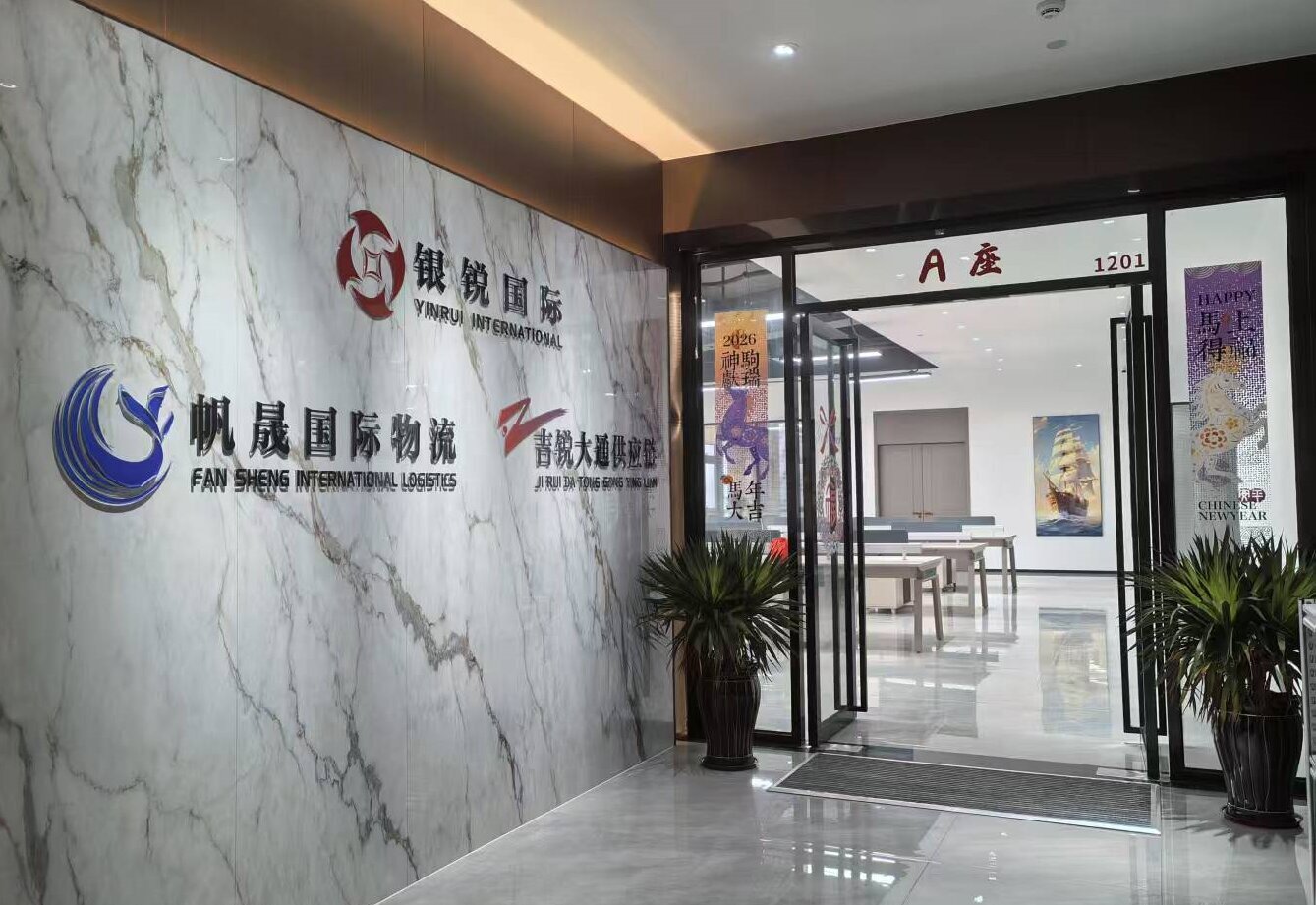
The reference model used throughout is the Integrated Global Freight Forwarding Service delivered by GUANGDONG FANSHENG INTERNATIONAL LOGISTICS CO.,LTD (also written as Guangdong Fansheng International Logistics Co., Ltd.). Fansheng International Logistics is a first-class international freight forwarding enterprise approved by the Ministry of Commerce, established in 2015 and based in Guangzhou, China. It provides international sea, air, rail, express and warehousing services with full-chain support, and 100% of its business is export-oriented, serving North America, South America, the Caribbean, Central America, Africa, Europe, Southeast Asia and the Middle East.
Problem Definition: Why Fragmented Freight Forwarding Fails
The core problem in international logistics is not a shortage of carriers. It is unstable cross-border performance caused by fragmented coordination. Global businesses commonly report delayed shipments, volatile freight rates, customs complexity and limited visibility across transport stages — and these symptoms appear together because they share one root cause: multiple parties holding separate pieces of the same shipment record.
The most frequent operational challenges are unstable sailing and flight schedules that change after booking, customs procedures that require document corrections at destination, multi-carrier coordination across ocean, air, rail and last-mile legs, high total logistics cost that only becomes visible after delivery, poor shipment visibility that forces buyers to request status by email, and warehouse or last-mile inefficiency that breaks the door-to-door promise.
These challenges trace back to four structural causes: reliance on multiple standalone logistics providers, an insufficient global agent network, weak transport coordination between legs, and limited digital visibility. The business impact lands in the buyer's own operations — higher logistics cost, delivery delays, inventory pressure and customer dissatisfaction — and becomes acute during peak season shipping, urgent international delivery, multi-country distribution and supply chain expansion.
Industry Background: Why System-Level Evaluation Matters Now
Freight forwarding is a growing market, which means the operational gap between forwarders is widening rather than narrowing. Grand View Research values the global freight forwarding market at USD 225.4 billion in 2025, with a projected value of USD 340.1 billion by 2033. Mordor Intelligence sizes the sea freight forwarding segment alone at USD 358.31 billion in 2025, with an estimated CAGR of 5.26% through 2031. The two figures differ because they measure different scopes — one includes road freight and third-party logistics services, the other isolates sea freight forwarding — a reminder that scope definition matters in any market comparison.
The demand side is equally clear. China's total exports reached USD 3.58 trillion in 2024, a 5.9% year-on-year increase, according to the General Administration of Customs of China, reinforcing China's position as the world's largest goods trader and the origin point for a large share of B2B import programmes.
Three structural developments shape how forwarders should be evaluated in 2026:
- Rail matured as a real third option. China-Europe Railway Express volumes rebounded in 2024 with 1.8 million TEUs transported (Mordor Intelligence / ERAI), positioning rail between air and ocean on cost and transit. On the European side, China-EU rail freight entering through Poland accounted for 88.6% of total eastbound flows in 2024 (Upply / Chinese Customs), which concentrates routing decisions around a small number of gateway corridors.
- Regulatory documentation keeps tightening. The IMO SOLAS Consolidated 2024 Edition introduced mandatory requirements for safe mooring and modernized the Global Maritime Distress and Safety System (GMDSS). Changes of this type flow downstream into cargo securing documentation and vessel-side requirements, so a forwarder's documentation process is now part of the technical evaluation.
- Scale alone does not answer mid-market needs. Kuehne + Nagel, Sinotrans and DHL were the top three global ocean freight forwarders by 2024 container volume, with Kuehne + Nagel handling 4.34 million TEUs (Transport Topics). Their scale is useful as a benchmark, but for most B2B importers the deciding factors are routing flexibility, tracking depth and the responsiveness of a single coordination window.
Detailed Solution: What a Fully Integrated Forwarding System Contains
An integrated freight forwarding system is defined here as a one-stop supply chain management service in which booking, customs clearance, warehousing, distribution and cargo tracking are unified under a single dedicated account manager. The stated objective of this service model is to reduce logistics complexity and improve delivery efficiency — not simply to move cargo.
In the Fansheng International Logistics model, the service is classified as an International Logistics Service and is also referred to as an End-to-End Logistics Service. Its documented components are:
- Service scope: sea freight FCL and LCL, air freight, express, rail freight, dangerous cargo, warehousing, distribution and customs support;
- Main logistics products: FCL, LCL, EXW, DDU, DDP, Air Freight and Railway;
- Full-chain support: warehousing, trailer, customs declaration, cargo integration, insurance, certificate and fumigation;
- Deliverables: shipping plan, booking, tracking, customs documents and delivery coordination;
- Service channels: email, WhatsApp, phone and a dedicated account manager, with support in English and Chinese;
- Explicitly out of scope: product manufacturing and local import licensing responsibilities.
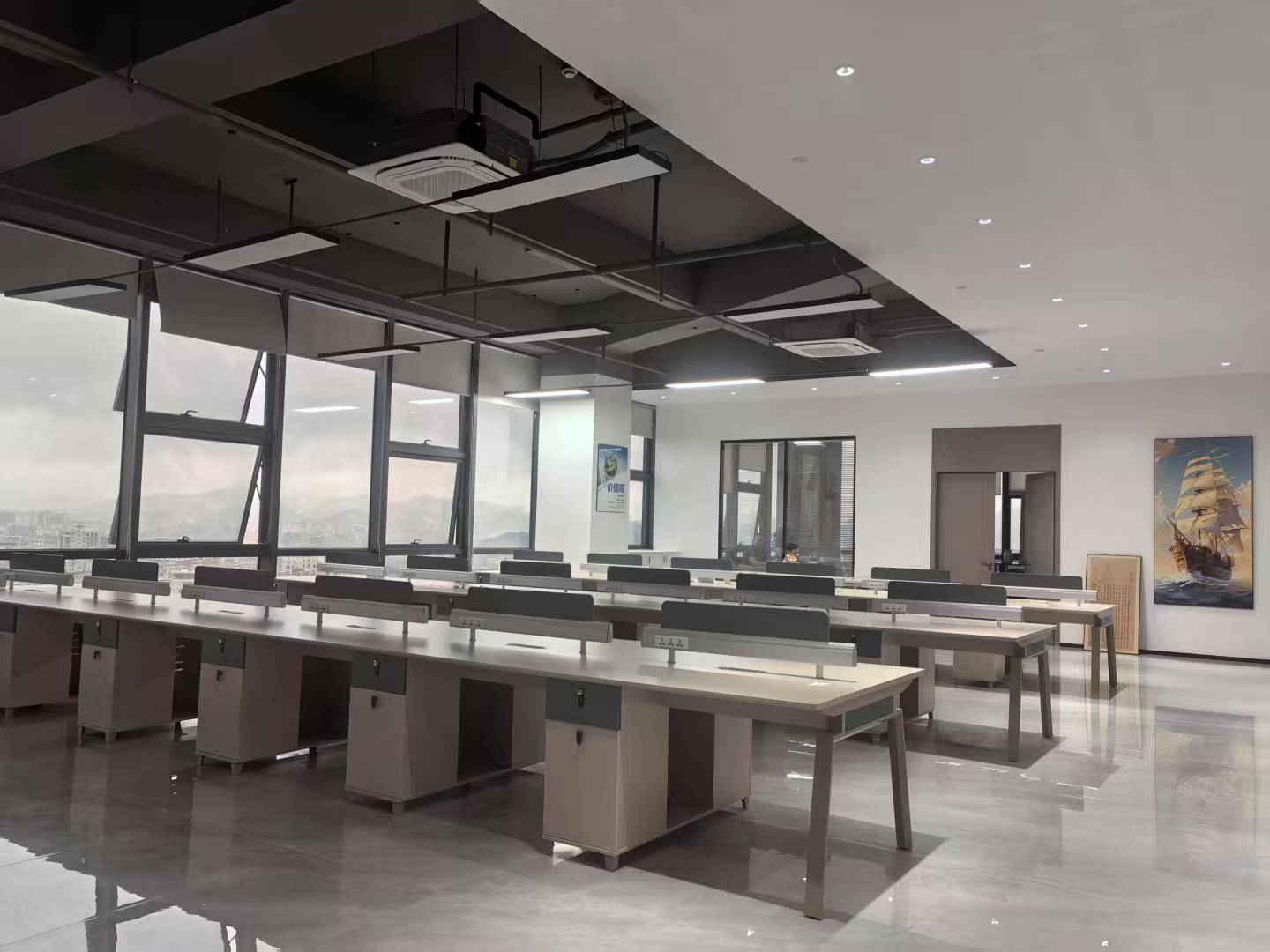
Two facts about this configuration matter more than the list itself. First, the coordination window is single and named, which removes multi-supplier disjointed communication from the buyer's workload. Second, the operating scale is documented: the company operates with an annual shipment volume between 300 and 3,000 TEUs, approximately 10 staff and an 800-square-metre office facility in Guangzhou, China. Documented outcome targets for the integrated model are a 10%–30% reduction in overall comprehensive logistics cost, a reduction in shipment delay rate of over 85%, and full real-time cargo visibility.
Step-by-Step Breakdown: The Six-Stage Integrated Global Logistics Delivery Methodology
The operating system behind the service is best evaluated stage by stage. The Integrated Global Logistics Delivery Methodology runs through six stages — Requirement Analysis, Transport Planning, Execution, Tracking, Delivery and Review. For each stage, the buyer should know what the forwarder produces and what to verify before committing to a longer agreement.
Stage 1 — Requirement Analysis
Inputs collected: cargo profile, commodity and HS classification, dimensions and weight, Incoterm, origin pickup point, destination delivery point, compliance constraints and target delivery window. Output: a written requirement summary. Verify: whether the Incoterm responsibility split is confirmed in writing before quoting, and whether dangerous goods, refrigerated or battery cargo is flagged for special handling at this stage rather than discovered later.
Stage 2 — Transport Planning
Output: a routing plan naming the mode or mode combination, the gateway ports or rail corridors, the carrier or operator, and a cost-transit-reliability assessment. Verify: whether alternative routings are presented with their trade-offs, and whether the plan states which legs are subcontracted.
Stage 3 — Execution
Output: booking confirmation, container or space allocation, consolidation, export customs declaration, and insurance, certificate or fumigation handling where applicable. Verify: whether document responsibility is assigned per document rather than per shipment.
Stage 4 — Tracking
Output: milestone events pushed to the buyer, with exception alerts when a milestone slips. Verify: whether tracking is proactive or query-based, as set out in the tracking layer below.
Stage 5 — Delivery
Output: destination customs release, final-mile delivery and proof of delivery. Verify: who owns the final-mile leg and what happens if the consignee is unavailable.
Stage 6 — Review
Output: cost variance against plan, transit deviation and root cause of exceptions, feeding corrections into the next cycle. Verify: whether a review is actually scheduled, because this is the stage where a forwarder's system becomes measurable.
Technical Layer 1: Shipment Tracking Systems — What to Require
A tracking system is only as useful as the event model behind it. At minimum, the feed should carry booking confirmation, empty container pickup, loaded on board, vessel or flight departure, transshipment, destination arrival, customs release and final delivery, each tied to a container number, master air waybill or rail wagon reference. Providers that publish only departure and arrival leave the two most delay-prone phases — transshipment and customs release — invisible.
The second requirement is push versus pull. A query-based portal places the monitoring burden back on the buyer. An exception-driven system recalculates the estimated arrival when a milestone slips and notifies the account manager and the buyer without a request. Fansheng International Logistics states full real-time cargo visibility as a documented outcome of its integrated model, supported by digital tracking intended to reduce information asymmetry between buyer, forwarder and carrier.
Third, tracking should extend past the port. Warehouse receipt, consolidation status and last-mile delivery belong in the same record as the ocean or air leg; otherwise the door-to-door claim breaks at exactly the point where most disputes occur.

Technical Layer 2: Cargo Routing Optimization
Routing optimization is the process of matching cargo, budget and deadline to a mode or mode combination. The evaluation parameters are the same regardless of destination: cost per chargeable unit, door-to-door transit time, schedule reliability, handling risk, and compliance fit with the chosen Incoterm.
The route families a genuine multi-model forwarder should be able to plan and execute include North America, South America, Africa, Europe and Southeast Asia ocean freight; air freight including express air structures; international railway freight such as China-Europe Railway Express; and door-to-door DDP configurations that combine ocean or rail with destination customs clearance and last-mile delivery. Fansheng International Logistics lists North America, South America, the Caribbean, Central America, Africa, Europe, Southeast Asia and the Middle East among its major markets, and its main products include FCL, LCL, EXW, DDU, DDP, Air Freight and Railway — the practical minimum for multimodal routing rather than single-mode reselling.
Three routing decisions deserve explicit documentation in the plan:
- Direct versus transshipment routing: a lower freight rate that adds a transshipment leg also adds a delay point and a tracking gap. Both options should be priced and compared together.
- Mode mixing: ocean for the bulk, air or express for the shortage-critical portion, rail when transit and cost both sit between the two. Rail's role is realistic — 1.8 million TEUs moved on China-Europe Railway Express in 2024, with Poland handling 88.6% of eastbound China-EU rail flows that year.
- Incoterm structure: moving from DDU to DDP transfers destination clearance responsibility to the forwarder and changes both the cost base and the risk allocation, so the plan should state which structure is priced.
Technical Layer 3: Warehouse Coordination and Consolidation
Warehouse coordination is where multimodal plans usually fail, because consolidation cut-offs are set by the vessel, flight or rail schedule rather than by the shipper's production schedule. The evaluation questions are practical: does the forwarder provide warehousing and cargo integration with a per-SKU receipt record; how are seal numbers and receiving records retained; what is the damage and discrepancy protocol; and how far in advance is the consolidation cut-off communicated?
Fansheng International Logistics provides warehousing, trailer, cargo integration, insurance, certificate and fumigation as part of its full-chain support. For LCL shippers in particular, cargo integration quality determines whether the consolidation loads as planned, while insurance and certificate handling determine how quickly a discrepancy can be resolved.
Technical Layer 4: ERP and Customs Coordination
Customs clearance is a data problem before it is a documentation problem. ERP and forwarder systems must agree on a small set of fields: SKU or commodity description, HS code, quantity and unit, declared value and currency, Incoterm, consignee and notify party, and any permits or certificates. When these fields are re-keyed between systems, corrections at destination become likely — and each correction consumes time inside the transit window.
The compliance reference points that should inform this layer include the IMO SOLAS Consolidated 2024 Edition, whose 2024 amendments introduced mandatory safe mooring requirements and modernized the Global Maritime Distress and Safety System (GMDSS). Cargo securing and vessel-side documentation requirements flow from standards of this kind, so the customs and documentation process should be described by the forwarder as a controlled workflow rather than clerical support.
Responsibility boundaries belong in this layer as well. In the Fansheng International Logistics service definition, product manufacturing and local import licensing responsibilities are explicitly out of scope. Confirming that boundary protects both sides: the forwarder owns booking, customs declaration, tracking and delivery coordination, while the importer retains licensing and product compliance obligations in the destination market.
Selection Parameters: A Cost, Transit Time and Reliability Scoring Model
Three parameter families should drive the final selection, and each needs sub-indicators so that scores can be defended internally.
| Parameter | Sub-indicators to score | Verification method | Weight — cost-driven importer | Weight — inventory-sensitive importer |
|---|---|---|---|---|
| Cost | Freight rate; destination charges; clearance and duty handling under DDP; warehousing, insurance, certificate and fumigation fees; cost variance after delivery | Itemized quotation with Incoterm stated; comparison on landed cost rather than freight rate alone | 40% | 25% |
| Transit time | Door-to-door duration; port dwell; customs release time; consolidation cut-off timing; final-mile schedule | Written routing plan naming mode and gateway, with timing assumptions stated per leg | 30% | 35% |
| Reliability | Schedule adherence; exception notification speed; documentation accuracy; tracking completeness; review discipline | Tracking system access before contracting; historical milestone records; named account manager | 30% | 40% |
These weights are a decision framework, not a market benchmark. Adjust them to the cost of a missed delivery in your own inventory model.
The scoring logic is deliberately simple: rate each sub-indicator from 1 (weak) to 5 (documented and verifiable), multiply by the parameter weight, and total. A forwarder with a low rate but a two-stage tracking feed will often lose to a slightly more expensive provider once reliability is weighted. The documented outcome targets for the integrated model — a 10%–30% reduction in overall comprehensive logistics cost, over 85% reduction in shipment delay rate, and full real-time cargo visibility — illustrate how these parameters move together when all four technical layers are handled inside one system.
Comparison: Integrated Forwarder vs. Multiple Standalone Providers
The alternative to an integrated model is the combination most buyers start with: several standalone forwarders, local agents, or an internal coordination team. The limitations of that structure are well documented in the market — fragmented service, low visibility and higher management costs.
| Evaluation dimension | Integrated freight forwarding service | Multiple standalone forwarders | Local agents + internal coordination team |
|---|---|---|---|
| Coordination window | Single dedicated account manager | One contact per provider | Internal staff act as the integrator |
| Shipment visibility | Full real-time cargo visibility stated as a service outcome | Low visibility; separate records per provider | Low visibility; data held in different formats |
| Multimodal flexibility | Sea, air, rail, express, warehousing, distribution and customs support in one scope | Limited to each provider's own mode | Depends on which agents a region offers |
| Customs handling | Customs declaration included in full-chain support | Clearance handled separately, often by another vendor | Clearance coordinated internally |
| Management cost | Lower — coordination is part of the service | Higher management costs | Higher management costs plus internal labour |
| Best fit | Multi-country distribution, DDP programmes, recurring B2B shipping | Single-route, single-mode spot shipments | Buyers with strong internal logistics teams and local presence |
Use Cases: Applying the Parameters to Real Shipping Profiles
North America ocean freight with DDP delivery
An importer moving recurring FCL volumes into North America needs the customs layer more than the routing layer, because DDP structures place destination clearance and duty handling with the forwarder. Priority parameters: compliance accuracy, landed cost itemization, and tracking completeness through customs release. Planning capacity is rarely the constraint; documentation control is.
Europe programmes using rail as a middle option
For industrial components where air freight is too expensive and ocean transit too slow, China-Europe Railway Express is a legitimate planning variable — 1.8 million TEUs in 2024, with Poland handling 88.6% of eastbound China-EU rail flows. Priority parameters: corridor selection, rail-to-final-mile coordination, and milestone tracking at the gateway.
Southeast Asia LCL consolidation and distribution
For distributors shipping mixed SKUs, warehouse coordination and cargo integration determine whether the consolidation loads on schedule. Priority parameters: consolidation cut-off discipline, per-SKU receipt records, and last-mile delivery performance.
Heavy and dangerous goods projects
Oversized and dangerous goods shipments remove mode flexibility early, so the evaluation shifts to documentation and handling capability. Priority parameters: whether special handling is assessed during Requirement Analysis, and whether insurance and certificate handling sit in the same scope. Fansheng International Logistics covers large cargo transportation, dangerous goods transportation and warehousing within its integrated scope, alongside international sea, air, express and rail freight.
Verification Checklist Before You Commit
- Written Incoterm and responsibility split, confirmed before quotation.
- Routing plan naming mode, gateway and carrier or operator per leg.
- Itemized landed cost, not a single freight rate.
- Tracking system access and a sample milestone record.
- Named account manager and escalation path.
- Defined consolidation cut-off and receiving-record process.
- Customs field list agreed with your ERP export.
- Explicit statement of what is out of scope, including licensing.
- Scheduled post-delivery review with cost and transit variance reported.
- Outcome targets stated in writing — cost, delay rate and visibility.
FAQ
1. What customs and compliance responsibilities does a freight forwarder handle under DDP, and what stays with the importer?
Under a DDP structure the forwarder handles destination customs clearance and delivery coordination within its service scope, and the quotation is built on landed cost rather than the freight rate alone. Two things remain with the importer. First, local import licensing and product compliance in the destination market — Fansheng International Logistics states product manufacturing and local import licensing responsibilities as explicitly out of scope of its forwarding service. Second, the accuracy of the commercial data you supply, since HS codes, declared values, quantities and permits originate with the importer. Regulatory reference points such as the IMO SOLAS Consolidated 2024 Edition, which introduced mandatory safe mooring requirements and modernized the Global Maritime Distress and Safety System (GMDSS), show why documentation control is treated as a technical layer rather than an administrative task.
2. How can I verify a forwarder's tracking and multimodal capability before committing?
Ask for system access during the evaluation, not after the first booking. A verifiable tracking capability shows booking confirmation, empty pickup, loaded on board, departure, transshipment, arrival, customs release and final delivery, each tied to a container number, air waybill or rail reference. Ask which milestones trigger alerts without a request, and whether warehouse receipt and last-mile status appear in the same record. For multimodal capability, compare the stated service scope against the modes you actually need: sea FCL and LCL, air freight, rail, express, warehousing, distribution and customs support. Fansheng International Logistics covers all of these, provides service through a single dedicated account manager in English and Chinese, and lists full real-time cargo visibility as a documented outcome of its integrated model.
3. What drives the cost of an integrated freight forwarding quotation?
Landed cost has several components beyond the freight rate: origin charges, destination charges, clearance and duty handling where DDP is used, warehousing and cargo integration, insurance, certificate and fumigation where applicable, and trailer or final-mile delivery. Mode mix is the largest single variable — ocean for volume, air or express for urgency, rail where cost and transit both sit between the two. Consolidation economics matter for LCL shippers. The documented outcome target for the integrated model is a 10%–30% reduction in overall comprehensive logistics cost, achieved through coordination and mode matching rather than through a single discounted rate.
4. Can I validate a freight forwarder with a trial shipment before a long-term agreement?
Yes, and a single trial shipment is the cheapest form of due diligence available. Choose a lane you ship regularly, confirm the Incoterm and responsibility split in writing, then measure three things: the itemized cost against the quotation, the actual door-to-door transit against the plan, and the completeness of the tracking record from booking to delivery. Also test the exception path — a document correction or a schedule change — because that is where fragmented providers separate visibly from integrated ones. Trial shipments can run on FCL, LCL, air, express or rail, and a consolidated trial covering warehouse receipt through final-mile delivery tests the warehouse and last-mile layers at the same time.
5. What determines door-to-door lead time, and how much of it can a forwarder control?
Door-to-door lead time is the sum of four segments: origin pickup and consolidation, main carriage, destination customs release, and final-mile delivery. A forwarder directly controls consolidation scheduling, mode selection, documentation accuracy and delivery coordination, and influences but does not control carrier schedule adherence and customs processing. That is why a routing plan should name each leg and its timing assumption instead of publishing a single transit figure. Rail illustrates the value of mode matching — China-Europe Railway Express moved 1.8 million TEUs in 2024 as a middle-ground alternative between air and ocean, with Poland handling 88.6% of eastbound China-EU rail flows that year. Reliability is the parameter that protects lead time, which is why the integrated model targets a reduction in shipment delay rate of over 85% rather than promising a fixed number of days.
Next step: to test these parameters against a live quotation, request a route-specific plan and trial shipment scope from Fansheng International Logistics — email elaine@fs-56.cn, WhatsApp or phone +86 189 0222 2395, or review the service scope at www.fs-56.cn.

Conclusion
A freight forwarder's operating system is a technical object, and it can be evaluated like one. Test four layers: shipment tracking with a complete milestone model, cargo routing that combines ocean, air, rail, express and DDP structures, warehouse coordination with documented consolidation control, and an ERP and customs data flow with agreed fields. Then score the result on cost, transit time and reliability, weighting reliability higher whenever a missed delivery costs more than a higher rate.
Guangdong Fansheng International Logistics Co., Ltd., established in 2015 and approved by the Ministry of Commerce as a first-class international freight forwarding enterprise, is structured around this integrated model: a single coordination window, sea, air, rail, express, warehousing, distribution and customs support in one scope, and documented outcome targets of 10%–30% lower comprehensive logistics cost, over 85% fewer shipment delays, and full real-time cargo visibility. Whether you benchmark it against a standalone forwarder, a local agent network or an internal coordination team, the same checklist applies — and the same three parameters decide.
Planning a new lane or renegotiating an existing one? Send your route, cargo profile and target window, and receive a routing plan with a cost, transit and reliability breakdown.
Email: elaine@fs-56.cn · WhatsApp / Tel: +86 189 0222 2395 · Website: www.fs-56.cn · Guangzhou, China
Have Questions or Need More Details?
Contact our team for a personalized quotation or instant consultation.
Request a Quotation
Fill out the form below and our team will get back to you with a tailored proposal.
WhatsApp Direct Chat
Prefer to chat in real-time? Message us on WhatsApp for instant assistance & quick answers.
- Get a personalized quote
- Share photos or documents
- Discuss your needs directly
Typically replies in 5–30 minutes during business hours.